Saturday, 20 June 2015

Top Minds Read Top Books: Lynda La Plante

@LaPlanteLynda
The award-winning and international best-selling author of crime fiction has kindly taken time out to share her thoughts on detective fiction writer, Raymond Chandler.

"My favourite author is Raymond Chandler. I know I should say Shakespeare, or one of the other classics, but I enjoy reading and re-reading Chandler as he makes me laugh out loud. His wit jumps off the page, and his ability to encapsulate a personality and character in a few lines is a lesson to every writer. He also has the most stunning titles for his books. As a reflection of his strength as a writer, many of his novels have been brilliantly transferred to the big screen."


Friday, 19 June 2015

Top Minds Read Top Books: Jodi Picoult

@JodiPicoult
The inspirational and internationally acclaimed American author has told The Pen Factor how much she enjoys reading "anything by Alice Hoffman". The author of the bestsellers Lone Wolf (2012) and My Sister's Keeper (2004) added "because she makes writing look easy and it never is!"


Books by Alice Hoffman include Here on Earth (1997), Blackbird House (2004) and The Dovekeepers (2011).
@AHoffmanWriter

Thursday, 13 March 2014

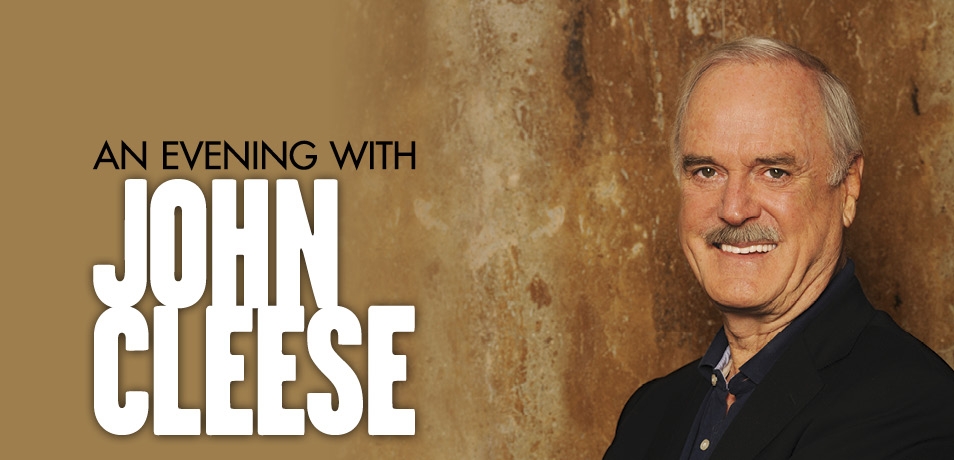
The Pen Factor Interviews: John Cleese


Clarissa: John, are you reading anything at the moment? Have you got anything on your bedside table?

John: Yes, I’ve got two or three, because I tend to do that. I’m just reading Seize the Day by Saul Bello. I haven’t read that for a long time. And I’m reading almost a more technical book on evolution, a simple sort of a school textbook. It’s quite good but I don’t particularly recommend it, because there’s too much trying to get rid of the idea of intelligent design as an argument.

I’ve just bought a book by Anatole France called The Gods Want Blood. He won the Nobel Prize. Let me think what else I’m reading. There’s one I’ve just finished called The Sense of an Ending by Julian Barnes. The truth is, I’m actually writing one myself at the moment. It would just be an evolution book. It’s called The Big Questions and it’s part of a series edited by the Oxford philosopher, Simon Blackburn.

Clarissa: I’ll have to keep an eye out for it! What non-fiction books have inspired you? Have any been life changing?

John: Well, when we talk about changing a life, you’re getting more into areas of self-help, aren’t you.

Clarissa: That’s true.

John: So, for example, I just read a book very recently by woman called Susan Cain, about introversion. And that gave me, since I’m basically introverted, the confidence to understand my cast of mind a little better than I have before. I read a book 34 years ago by Eysenck and that was all extroversion-introversion too. I think that it told me an enormous amount about how my mind worked; so that was very helpful. And in more recent years, I’ve read The Black Swan, and I was quite shocked to realize how bad we all are at forecasting the future. And then I recently read a book called The Drunkard’s Walk.

Clarissa: The Drunkard’s Walk?

John: Yep, by a guy called Leonard Mlodinow, and that’s about probability. Now that had a particularly strong effect. Novels, doesn’t happen so much. Although I recently read Ian McEwan’s On Chesil Beach, and I thought that was almost life changing, because it contained an idea that I just thought was extraordinarily important.

Clarissa: Now of course you wrote a book called Families and how to Survive Them with Robin Skynner, is that right?

John: Robin Skynner, that’s right, yes. That was definitely a self-help book, written in the days when the British didn’t really bother with the self-help book.

Clarissa: Yes, it was sort of avant-garde, I suppose.

John: It was! They didn’t know where to put it on their shelves …

Clarissa: It was actually a friend in Oxford who recommended your book, and he was an analytical grandchild of Jung.

John: That’s very interesting. I’m glad you mentioned Jung because I was going to suggest that Memories, Dreams and Reflections was a book that changed me but I’m not sure how. I think it was about rearranging my priorities.

Clarissa: Do you think dreams are literal?

John: I don’t know but I think that they come in enormously different varieties and I think that the vast majority of them are extremely banal. But from what I’ve understood, the occasional dream, very very occasional dream is significant.

Clarissa: If you had a gun to your head and had to choose between a career in writing or acting, which one would you choose?

John: Oh, you wouldn’t have to put a gun to my head, writing every time! It’s so much more interesting.

Clarissa: Yes, it’s a gorgeous process, isn’t it?

John: And it is also, and I’m sorry to say this for actors, but it’s also far more creative.

Clarissa: Yes, absolutely.

John: Acting is basically interpretative, and the only part of acting that I find interesting, is taking something that I’ve written and performing it in front of an audience to find out whether it works or not.

Clarissa: I suppose they’re restricted, whereas with creative writing you can go into a whole world of your own. 

John: Yes, yes, that’s right.

Clarissa: Last question for you John: what is the most challenging part of the writing process?

John: Getting down to it.

Clarissa: [Laughs.] Yes, it’s that first line, isn’t it.

John: Like I called you this morning, rather than start work. [We laugh.]

Clarissa: Well, you know what, I won’t hold you back, but can I just say how much I enjoyed your show the other night. I just couldn’t stop laughing, it was so much fun!

John: Oh good!

Clarissa: One of the funniest anecdotes, was the one with Michael Palin, when you crept into his bedroom and he hadn’t even spotted you! [We laugh]

John: He had no idea that I was there. None at all!

Clarissa: It reminded me of the time I jokingly sent my big brother to join my sleeping husband in bed, but the joke was on my brother who hadn't anticipated being molested by my husband, thinking it was me.

John: Ha! Oh, how hilarious. That’s very funny.

Clarissa: But listen, thank you ever so much John …

John: Well, I applaud what you’re doing.

Clarissa: Much appreciated. Enjoy the rest of your stay in Australia.

John: Thanks, I’ll go and do my 800 words now.


March 2014, Hobart 

John has since published So, Anyway...: The Autobiography.
A brilliant account of his life so far! 


Thursday, 10 October 2013

Clarissa Horwood, Founder of The Pen Factor

Meet the founder of The Pen Factor: published writer, entrepreneur, reading for pleasure advocate and mother, Clarissa Horwood.


Clarissa Horwood, Founder, The Pen Factor
I was born in Oxford of an altruistic French mother and an academic English father. My education was in French and most summers were spent with my grandmother near Paris. I have always considered myself to be British European. My home is now in Tasmania, Australia. My entire existence, however, is deeply rooted in Oxford. It is difficult to decipher exactly what impact my forefathers have had on who I am today. The Pen Factor was certainly born out of the influences that shaped my life.   


My great-grandfather, H. Wheeler Robinson, was the Principal of Regent’s Park College, Oxford. He was responsible for relocating the college from London to its current location in Pusey Street. He believed it was a more congenial setting than London for a college. Today his books are widely used in the Faculty of Theology.


F. C. Horwood, Tutor and Dean
The Reverend Henry Wheeler Robinson
Tony Horwood, my father
My own father, Tony Horwood, adored him and inherited his love of literature. In 1958, my father was given a place at King’s College, Cambridge, where he studied Arabic, Persian and French. As a young graduate, he became Head of International House in Teheran and later he founded his own language schools in Oxford. His real passion, however, was for writing.
As a child, I would gratefully listen to Dad’s typewriter echoing late into the night. His fierce tapping chased away the dormitory ghosts that haunted me. 

He wrote indefatigably, and steadily submitted his poems and short stories, decade after decade. Some were published, while others were returned with a compliment slip. His most beautiful novel was never submitted. That would be his last.

To this day, I do not understand why his best work was placed in a stamped brown envelope, but never posted. Perhaps he lost hope. 

My father’s prose outlives him, but he continues to be my source of inspiration. His unchartered talent has inspired me to encourage those who have found their raison d'ĂȘtre in writing to keep on fueling their passion. I am undeniably a late developer. It took the death of a parent and the birth of a child to identify my strengths and passions. Dad’s legacy left an imprint on my heart. Writing has helped fulfil me in motherhood and inject inspiration into my own children. 

Keep the dream alive. Keep writing. 


Meet the rest of The Pen Factor team!